
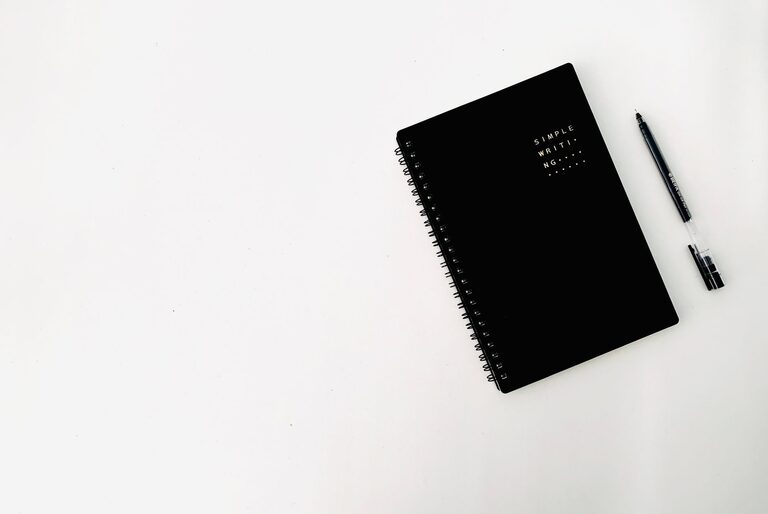
A beautiful notebook can be tempting, but appearance alone does not make it useful. Many people buy notebooks with good intentions, write on the first few pages, and then leave them on a shelf. The problem is often not a lack of motivation. It is a poor match between the notebook and the way they actually live and work.
The right notebook should feel easy to pick up, comfortable to use, and suitable for the kind of writing you want to do. Whether you need a place for meeting notes, daily planning, sketches, ideas, or personal reflections, a few thoughtful choices can help you find one you will keep using.
Start With Its Main Purpose
Before comparing covers, paper, and page designs, decide what the notebook needs to do. A notebook designed for quick lists may not work well for long-form writing, and a sketchbook may be frustrating for detailed notes.
Ask yourself:
– What will I write or draw in it?
– Where will I use it?
– How often will I carry it?
– Do I need to find older entries quickly?
– Will other tools, such as a phone or calendar, be used alongside it?
Common purposes include:
Daily planning
A planner-style notebook may be best if you need space for appointments, tasks, and priorities. Look for dated pages or a simple layout with enough room for each day.
Work or school notes
For classes, projects, or meetings, choose a notebook with enough pages and a format that supports organized notes. Numbered pages, an index, or a sectioned design can be helpful.
Journaling
A blank or lined notebook gives you more freedom for personal writing. If you write often, consider a durable binding and paper that feels comfortable during longer sessions.
Ideas and quick notes
For capturing thoughts throughout the day, portability matters most. A small notebook that fits in a pocket or bag is more useful than a large one that stays at home.
Drawing and creative work
Choose paper based on your tools. Pencil and ballpoint work on many types of paper, while markers, ink, and paint may require thicker pages that resist bleeding.
Choose a Size You Will Carry
Notebook size has a direct effect on how often you use it. A large notebook offers more writing space but may be inconvenient to carry. A small notebook is portable but can feel cramped when you need to write more.
Consider where the notebook will live:
– Pocket size: Useful for quick reminders and short lists.
– Medium size: A practical choice for everyday notes and planning.
– Large size: Better for detailed writing, study notes, and creative work.
– Desk size: Ideal if the notebook will stay in one place.
Think about your normal routine rather than an ideal version of it. If you commute, travel, or move between rooms often, a lighter notebook may be the better choice. If you usually write at a desk, a larger format may offer more comfort.
Also check whether the notebook fits your bag, desk drawer, or preferred storage space. A notebook that is difficult to store can quickly become easy to forget.
Pick the Right Page Layout
The page layout should support the way you write. The most common options are lined, blank, dotted, and squared pages.
Lined pages
Lined paper works well for regular writing, lists, school notes, and journaling. Check the spacing between lines. Wide spacing can be comfortable for larger handwriting, while narrow spacing provides more room on each page.
Blank pages
Blank pages offer maximum flexibility. They are useful for sketches, diagrams, mind maps, and writing without visual restrictions. However, some people find them less helpful for keeping text straight.
Dotted pages
Dotted paper provides subtle guidance without looking crowded. It is popular for bullet journals, planning, diagrams, and mixed writing and drawing.
Squared pages
Grid paper is useful for charts, tables, technical notes, and neat layouts. Choose a grid size that matches your handwriting and the type of information you record.
If you are unsure, think about your most common entry. If it is mostly paragraphs, start with lined pages. If it includes lists, shapes, and flexible layouts, dotted pages may be a better fit.
Pay Attention to Paper Quality
Paper affects how enjoyable a notebook feels. You do not need the most expensive paper, but it should work well with your preferred writing tools.
Test or check the following:
– Does ink show through to the other side?
– Does the paper feel smooth or textured?
– Does your pen glide easily?
– Are the pages thick enough for your usual tools?
– Is the paper bright white, cream, or another shade that feels comfortable?
If you use gel pens or fountain pens, smooth, heavier paper may be important. If you use pencil, a slightly textured surface can provide a pleasant feel. For markers, look for paper made to reduce bleed-through.
A simple test is to use the notebook with the pen you carry most often. If the writing feels scratchy, smudges easily, or leaves marks on the next page, you may be less likely to use it.
Consider Binding and Durability
The binding determines how easily a notebook opens and how well it holds up over time.
– Spiral binding: Opens flat and makes it easy to fold pages back. It can be convenient for note-taking but may catch on bags or clothing.
– Sewn binding: Often durable and allows the notebook to open relatively flat.
– Glued binding: Can be slim and neat, but pages may loosen with heavy use.
– Disc or ring systems: Allow pages to be moved or replaced, which is useful for flexible organization.
The cover also matters. A soft cover is usually lighter and easier to carry. A hard cover offers more protection and provides a firm writing surface when you are away from a desk.
Choose durability based on your routine. A notebook used at home may not need a protective cover. One carried daily through a busy schedule should withstand being placed in a bag, handled often, and exposed to normal wear.
Make It Easy to Find and Use
The best notebook is one you can access without effort. Keep it near the activity it supports. A work notebook can stay beside your computer, while a personal journal might belong on a bedside table.
You can also improve usability with simple features:
– A bookmark for your current page
– An elastic band to keep it closed
– A pen loop or attached pen
– Numbered pages
– An index at the front
– Perforated pages for temporary notes
– Interior pockets for loose papers
Avoid choosing features just because they sound useful. Extra sections, accessories, or complicated layouts can create friction if they do not match your habits.
Match the Notebook to Your Writing Style
Your handwriting and note-taking style should guide your choice. If you write large, a small notebook with narrow lines may feel restrictive. If you prefer short bullet points, a large notebook may create too much empty space.
Think about:
– How large you write
– Whether you use headings
– How much space a typical entry needs
– Whether you mix words, numbers, and drawings
– Whether you prefer one topic per notebook or several topics together
It can help to look at a notebook you have used successfully in the past. Note its size, paper, layout, and binding. These details provide a better guide than choosing based only on appearance.
Do Not Wait for the Perfect Notebook
A notebook does not need to be perfect before you begin using it. In fact, waiting for the ideal system can become another form of procrastination.
If you are uncertain, choose a practical, affordable option and use it for a week. Pay attention to what feels inconvenient. Is it too heavy? Are the lines too narrow? Do you need more page space? Your answers will make the next choice easier.
You can also assign one clear role to a new notebook instead of expecting it to manage everything. For example, use it only for work ideas, reading notes, or daily tasks. A clear purpose makes it easier to build a regular habit.
Choose the Notebook You Will Reach For
The right notebook is not necessarily the most stylish, expensive, or feature-rich option. It is the one that fits your routine well enough to be used without much thought.
Start with its purpose, then consider size, layout, paper, binding, and useful features. Choose a format that feels comfortable and keep it within easy reach. When a notebook supports your real habits instead of an imagined routine, it has a much better chance of becoming part of your everyday life.