
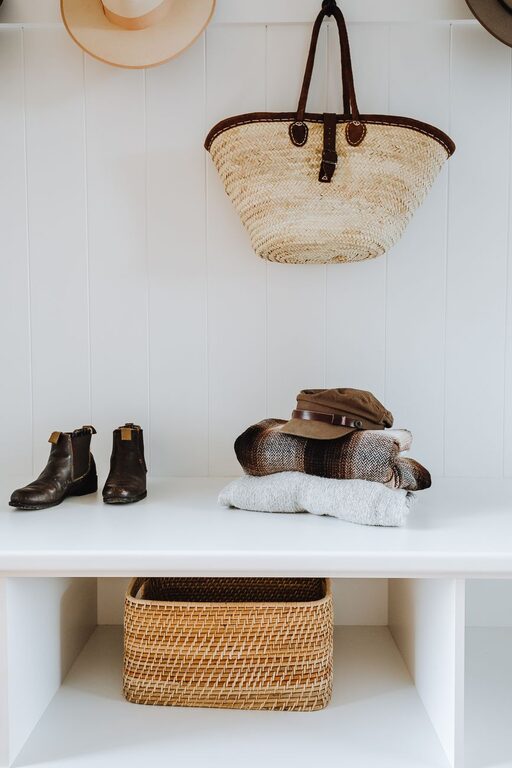
Your entryway is the first part of your home that you see when you arrive and the last place you pass before leaving. Because it handles shoes, coats, bags, mail, keys, and many other daily items, it can quickly become cluttered.
The good news is that an organized entryway does not require a large budget or a spacious floor plan. With a few practical changes, you can create a tidy, useful area that makes coming and going easier.
Start by Clearing the Clutter
Before adding storage, remove everything from the entryway. Place items on the floor or a nearby table so you can see exactly what has collected there.
Sort everything into simple groups:
– Items that belong in the entryway
– Items that belong in another room
– Items to donate or recycle
– Items that need repair or attention
Be selective about what returns to the space. The entryway should hold items you use regularly, such as everyday shoes, coats, bags, umbrellas, and keys. Seasonal items and rarely used accessories can be stored elsewhere.
This first step often makes the biggest difference. It also helps you choose storage that fits your actual needs instead of buying containers that may not be useful.
Create a Drop Zone for Everyday Items
A drop zone gives each frequently used item a designated place. When storage is convenient, it is easier for everyone in the household to put things away.
Depending on the size of your entryway, a drop zone might include:
– A small tray for keys and sunglasses
– Hooks for coats, hats, and bags
– A basket for scarves or gloves
– A shelf for small accessories
– A mat or rack for shoes
Keep these items close to the door so they are easy to reach. Avoid placing storage in a location that requires extra steps, such as walking across the room or opening several doors.
For shared spaces, consider assigning a hook, basket, or shelf to each person. This makes it easier to find personal items and helps prevent belongings from spreading across the entire entryway.
Use Wall Space Wisely
When floor space is limited, look upward. Wall-mounted storage can hold many everyday items without taking up much room.
A row of sturdy hooks is one of the simplest entryway solutions. Install hooks at a comfortable height for adults, and add lower hooks if children use the space. Choose hooks that can support the weight of the items you plan to hang.
Other useful wall storage options include:
– A narrow shelf with hooks underneath
– A pegboard for flexible storage
– A wall-mounted mail organizer
– Small baskets attached to the wall
– A mirror with a shelf or hooks
Leave enough space between hooks so coats and bags do not overlap too much. Overcrowded hooks can make the area look messy and make it harder to find what you need.
Organize Shoes by Frequency of Use
Shoes are one of the most common causes of entryway clutter. Start by deciding how many pairs should stay near the door. Keep daily shoes within easy reach and move special-occasion or seasonal footwear to a closet or bedroom.
Good shoe storage options include:
– A low shoe rack
– Stackable shelves
– Open cubbies
– A storage bench
– Baskets for slippers
– A slim vertical cabinet
If you use open storage, arrange shoes in pairs and place them neatly after each use. If you prefer a cleaner appearance, choose closed storage or baskets that hide the contents.
Avoid keeping more shoes in the entryway than the storage can comfortably hold. Once the shelves are full, extra pairs tend to collect on the floor.
Add a Bench With Hidden Storage
A bench can make an entryway more comfortable and functional. It provides a place to sit while putting on or removing shoes and can also offer useful storage.
Look for a bench with:
– Lift-up seating
– Drawers
– Open cubbies
– Space underneath for baskets
Use the storage for items such as hats, gloves, reusable shopping bags, or pet accessories. Label baskets if several people share the space.
If your entryway is narrow, choose a slim bench with a simple shape. Make sure there is still enough room to walk comfortably between the bench and the opposite wall or furniture.
Give Keys, Mail, and Small Items a Home
Small items are easy to lose because they do not need much space. A tray, bowl, or wall organizer can keep them contained.
Choose one specific location for keys and use it consistently. A small hook rail near the door is helpful if each person needs a separate spot. A tray may work better for sunglasses, wallets, and other items that are carried together.
Mail can quickly create visual clutter. Place a small sorter or basket near the entryway and create a simple routine:
- Recycle unwanted mail immediately.
- Place important items in the sorter.
- Move bills, forms, or documents to the room where they will be handled.
- Empty the sorter regularly.
The goal is to prevent the entryway from becoming a long-term storage area.
Make Room for Seasonal Changes
Your entryway needs change throughout the year. Heavy coats and boots may be useful in colder months, while lighter jackets, hats, and sandals may be all you need during warmer weather.
At the start of each season, review what is currently stored near the door. Move out-of-season items to a closet, storage bin, or another suitable location. This creates more space for the things you use daily.
You can also keep a small basket for seasonal accessories. Store gloves and hats together in colder months, then replace them with sun hats or lightweight accessories when the weather changes.
Keep Cleaning Supplies Nearby
Entryways often collect dirt from outside, especially on rainy or snowy days. Keeping basic cleaning supplies nearby can make cleanup faster.
Consider storing:
– A small broom and dustpan
– A handheld vacuum
– Cleaning cloths
– A shoe brush
– A washable mat
Place cleaning tools in a closet or tall cabinet if you do not want them visible. A durable doormat inside and outside the entrance can also help reduce the amount of dirt brought into the home.
Choose a mat that fits the doorway without blocking it. Clean or shake out the mat regularly so it continues to work effectively.
Use Labels and Simple Rules
Labels can make shared storage easier to maintain. Label baskets by person, item type, or purpose, such as “winter accessories,” “shopping bags,” or “pet items.”
Simple household rules can also help:
– Shoes go on the rack or mat.
– Coats go on hooks.
– Keys go in the tray or on the key rail.
– Mail is sorted as soon as possible.
– Items that do not belong in the entryway are moved each evening.
These rules should be easy to remember. The best organization system is one that fits naturally into your daily routine.
Do a Five-Minute Reset
Even a well-organized entryway can become untidy during a busy week. A short daily reset can keep clutter under control.
At the end of the day, return shoes to their storage, hang up coats, move stray items to their proper rooms, and clear the entryway surface. This usually takes only a few minutes when done regularly.
Once a week, check for items that have collected on the floor, in baskets, or on shelves. Remove anything that does not belong and adjust the system if a particular area is consistently overflowing.
Create an Entryway That Works for You
An organized entryway should be practical before it is decorative. Start with the items your household uses most, then choose storage that keeps those belongings easy to reach.
Use the walls, limit the number of items kept near the door, and give every essential item a home. With a few small habits and regular five-minute resets, your entryway can stay clean, welcoming, and ready for the next arrival or departure.